
Process & Material
My painting begins before the image appears. I prepare my own wasli by joining layers of handmade paper and working the surface until it becomes a ground capable of receiving successive layers of pigment. The construction of this surface is inseparable from my thinking about memory, experience and identity—each formed gradually through accumulation, pressure and traces of time.
01
The Paper
The process begins with handmade Nepali paper. Its fibres, texture and irregular edges remain an important part of the final surface. Rather than treating the paper as a neutral support, I begin with its physical character and gradually transform it through successive layers.

02
Building the Wasli
Multiple sheets of paper are pasted together layer by layer to form a thick, resilient wasli. Once stacked, heavy weights compress the layers into a unified support. Much like how memory and identity build over time, what appears to be a single sheet actually holds hidden layers and traces beneath its surface.


03
Tea Coating
A tea coating is applied across the newly built sheet to stain the paper with a warm, organic undertone. This natural wash imbues the paper with a subtle age and warmth, creating an atmospheric background layer before any pigment touches the surface.
04
Burnishing the Ground
Once dry, the surface is vigorously rubbed with a smooth stone. This physical act flattens and seals the paper fibers, transforming the layered, tea-stained sheet into a firm, dense, and receptive ground—a prepared surface carrying its own material history.


05
Layering Earth Pigments & Tempera
Color is introduced using traditional Indian tempera and natural earth pigments. Applied in delicate, translucent layers, the image develops slowly over time—mirroring the same sense of physical accumulation that began with the paper construction itself.
06
Final Painting & Details
In the final stage, fine details, highlights, and selective gold leaf accents are brought together to complete the artwork. The final painting remains both a visual image and a physical record of every layer, tone, and surface treatment beneath it.


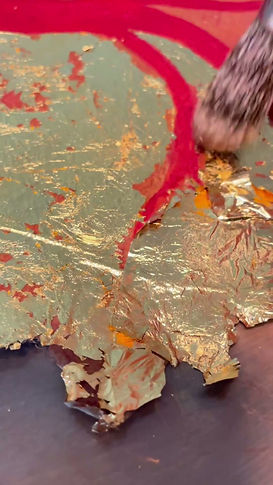

From Surface to Image
The finished painting contains the history of its own making. Beneath the visible image are layers of paper, pressure, rubbing and preparation. The surface becomes both material and metaphor: a place where traces accumulate and where memory, experience and transformation gradually take form.